
Why do some bacteria switch hosts while others stay loyal?
A new research project funded by the Independent Research Fund Denmark will investigate how bacteria evolve alongside their hosts over hundreds of thousands of years, yet occasionally make extraordinary jumps between distantly related animal species.
Led by Associate Professor Sandra Breum Andersen at the Center for Evolutionary Hologenomics, the project will explore how bacterial traits and host biology shape these evolutionary relationships in the bacteria genus Helicobacter.
Bacteria with different strategies
Bacteria living in the gastrointestinal tract play important roles in animal health and development. While some bacteria co-speciate with their hosts over millions of years, or colonise related hosts, others can jump to distantly related new hosts. Understanding what drives these different strategies could provide new insights into microbial evolution, symbiosis and the emergence of new diseases.
With a new Project1 grant from the Independent Research Fund Denmark, Sandra and her collaborators including postdoctoral researcher Dinah Maran Parker will investigate what determines whether bacteria remain closely associated with their hosts or jump between species.
Following the evolutionary history of Helicobacter
The project with the title: “Between fidelity and flexibility: The evolution of host association in bacteria”, focuses on the bacterial genus Helicobacter. Its best-known member, Helicobacter pylori, has colonised the human stomach for at least 300,000 years, evolving alongside humans as they spread across the globe. Yet its closest bacterial relatives are found in whales and large cats.
This contrast makes Helicobacter an intriguing model for studying how host associations evolve. These bacteria inhabit the stomach or intestines, where they can influence host immune regulation and metabolism. However, which factors that enable jumps to distantly related and apparently very different hosts remain poorly understood.
Exploring bacteria across the animal kingdom
The researchers will combine evolutionary biology, genomics and microbiology to investigate how bacterial traits interact with host physiology and ecology. A new dataset that more than doubles the known diversity of Helicobacter will help the team reconstruct the evolutionary history of the genus and identify patterns in how bacteria have adapted to different animal hosts.
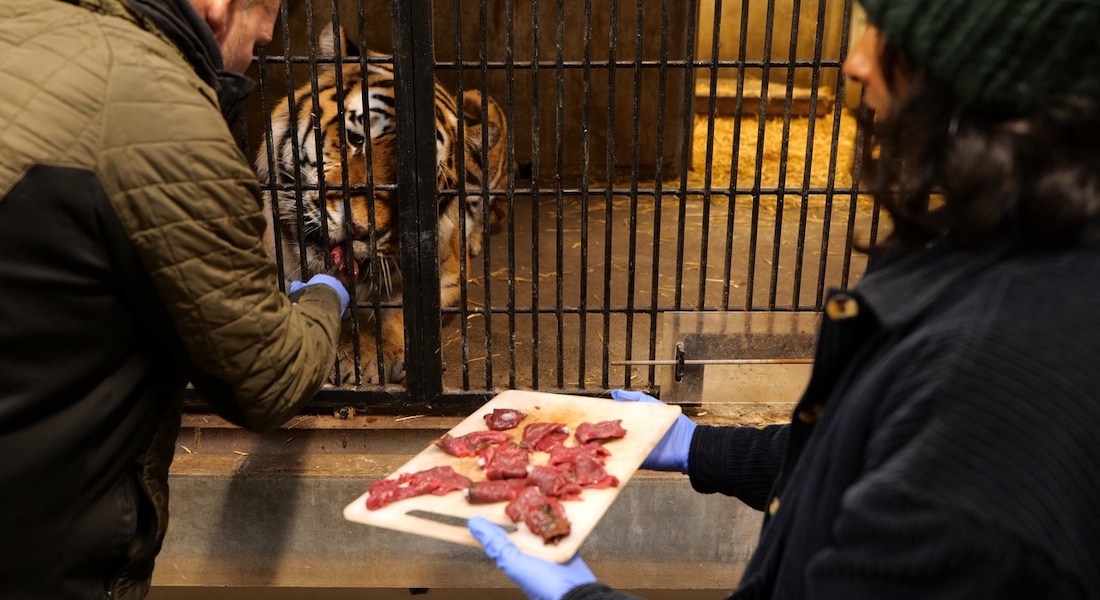
The project will draw on samples collected from a range of animals, including carnivores, rodents, reptiles and bats. Tim Kåre Jensen from UCPH Veterinary School and Stamatios Tahas at Copenhagen Zoo have contributed to sample collection, helping the researchers expand the diversity of Helicobacter available for study.
“We have samples from invasive racoon dogs, beavers, wolves, and many other species. We believe that by including new Helicobacter species from these, and information about host physiology and ecology, that we’ll be able to understand what makes a host jump successful, and how the bacteria and hosts shape each other.” says Sandra Breum Andersen.
The team will also develop new DNA sequencing methods to identify bacterial genomes directly from animal tissues, opening up new possibilities for investigating host-associated microbes.
Understanding what enables bacteria to cross species boundaries
By examining why some bacteria maintain long-term relationships with particular hosts while others establish associations with new species, the project aims to uncover the evolutionary mechanisms that shape host–microbe relationships.
“In doing so, we hope to learn not only about Helicobacters but also about more general life strategies of host associated bacteria - an important topic in the quest to predict zoonotic disease and identify beneficial microbes” Sandra ends.
Contact:
Associate Professor Sandra Breum Andersen
Postdoctoral Researcher Dinah Maran Parker