
New eDNA initiative aims to make water quality monitoring in Denmark more accessible
A new Danish freshwater biodiversity initiative is gaining momentum following a major round of environmental DNA (eDNA) sampling that will support the development of a future taxonomic independent community index (TICI) for stream health assessment in Denmark.
Valuable collaborations
A collaboration between Danish researchers, freshwater specialists, and New Zealand-based eDNA company Wilderlab is laying the groundwork for a national biodiversity index that could transform how Denmark monitors its rivers and streams. By combining advanced DNA sequencing with traditional ecological surveys, the project aims to deliver faster, cheaper, and more accessible monitoring of aquatic ecosystems.
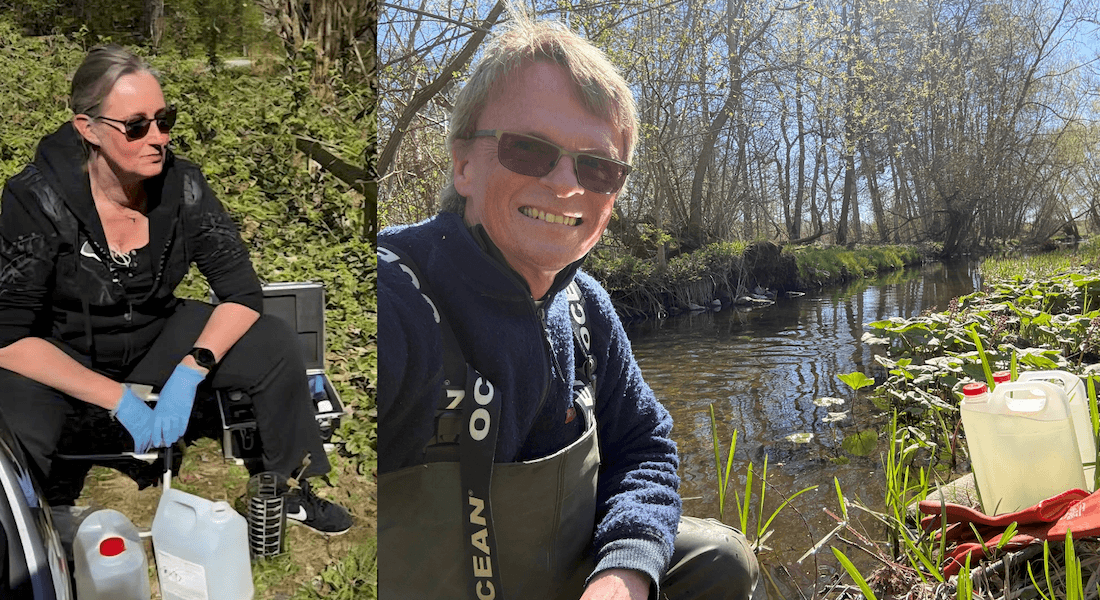
The fieldwork led by freshwater biologist Per Gørtz and laboratory technician Ulla Imer Gørtz was carried out on a voluntarily basis and included extensive water sampling and macroinvertebrate surveys across Denmark. The project complements traditional Danish Stream Fauna Index (DSFI) assessments, of which Per Gørtz is an expert, with new eDNA sequencing capable of identifying aquatic species at species level. Before the fieldwork Ulla was introduced to the eDNA sampling, which she, due to her extensive experience as a lab technician, carefully carried out with great expertise at the 50 localities.
National-wide effort
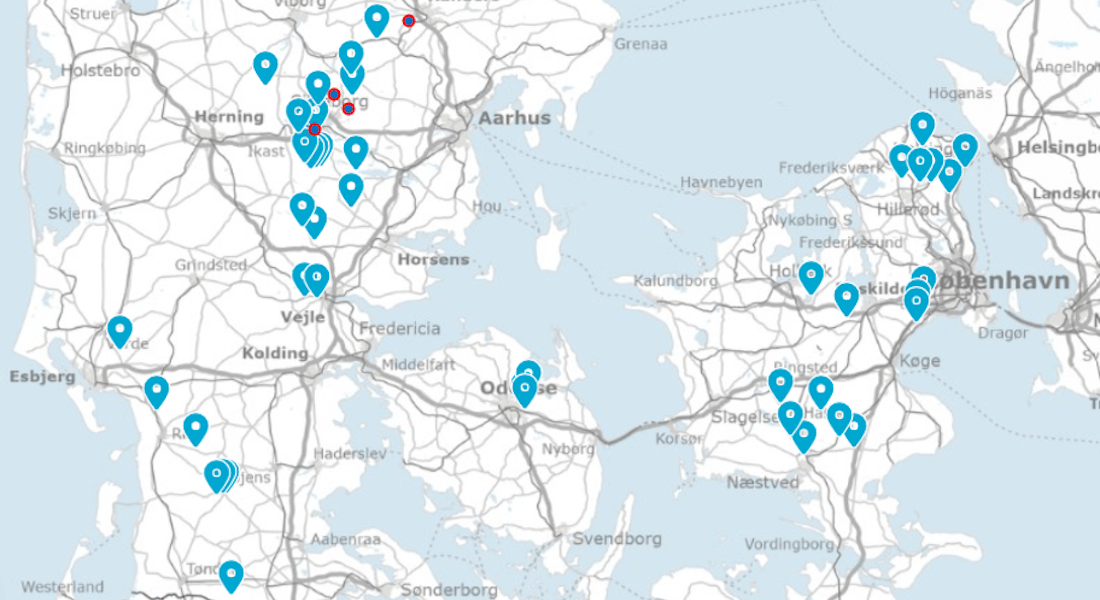
Included in the material is “Gudenåen”, the longest and one of the two largest rivers in Denmark, and “Suså”, the biggest river in Zealand, as well as several other streams. In total 19 water systems, located across Jutland, Funen and Zealand, were sampled in this project.
“It will be very interesting to compare the macro-invertebrate community we collected at the monitoring sites with the DNA results,” says Per Gørtz, senior consultant at NIRAS. “We expect DNA to move downstream, which is why we sampled multiple locations along each stream and river.”
Impressive new technologies
The initiative grew out of a collaboration between Danish researchers from the Globe Institute Professors Tom Gilbert and Anders Johannes Hansen, Professor Mike Bunce of the Minderoo Foundation, and Dr Shuan Wilkinson, the founder of Wilderlab. Wilderlab specialises in aquatic eDNA sequencing and provides open-access biodiversity and water quality data through their Wilderlab webpage and initially developed the TICI index concept.
“The technology offers a low-cost and scalable way to monitor national rivers and lakes,” says Tom Gilbert. “By developing a Danish reference index, we hope to create a system that scientists, municipalities, and even citizens can use to monitor freshwater quality quickly and affordably.”
A chance to rediscover rare species
Sampling covered both official monitoring stations and additional eDNA-only sites to strengthen future index development. Four newly added locations include two new official monitoring stations and two supplementary eDNA sampling sites, expanding the dataset beyond Denmark’s standard monitoring network.
“One of the streams (Gudenåen) we sampled may contain very rare species that have not been recorded in Denmark for decades, for example the thought to be extinct stonefly Microcephala dispar last recorded in 1955 on the lower broader watercourse” says Per Gørtz. “I’m very excited to see whether this historical species will appear in the eDNA samples”. Per continues: “We might also find newly immigrated species at sites that have been inadequately studied in the national monitoring program for decades, which all together will contribute to our species knowledge of the diversity of the macroinvertebrate fauna in Danish streams”.
“The goal is that by making this new technology and index broadly accessible it can be used as a quick and affordable way to reveal the water quality of streams across the nation and thereby help experts access and protect the water quality of our streams” Tom Gilbert ends.
Contact:
Professor Tom Gilbert