
Gene sharing keeps life’s genetic code stable
A new paper in the Cell Press journal Trends in Genetics is challenging one of biology’s oldest assumptions: that the genetic code’s near-universality is simply a frozen accident of early evolution. Instead, researchers argue it is actively maintained by a powerful evolutionary force - horizontal gene transfer.
An universal code
The study draws on comparative genomics and recent advances in synthetic biology to explain why the genetic code is nearly universal across life meaning that most life on Earth “speaks” the same genetic language. While the National Center for Biotechnology Information recognizes at least 27 variants of the genetic code, the vast majority are found in eukaryotes - organisms like plants, animals, and fungi - rather than in prokaryotes such as bacteria and archaea.
According to the authors, the reason lies in connectivity. Prokaryotes frequently exchange genes through horizontal gene transfer (HGT), a process that allows DNA to move between unrelated organisms. This constant genetic exchange creates strong pressure for compatibility: organisms that share a common genetic code can more easily use newly acquired genes, giving them a survival advantage.
A common language
“It's similar to human language,” Researcher Peder Worning explains “Communities that communicate frequently tend to maintain a shared language, while isolated groups develop distinct dialects or entirely new languages.”
In contrast, eukaryotic cells are more genetically isolated. Features such as sexual reproduction, cellular compartmentalisation, and limited DNA exchange reduce the frequency of HGT. This isolation has allowed alternative genetic codes to emerge and persist in eukaryotic nuclei, organelles like mitochondria and microbes that live within compartments.
The role of hackers
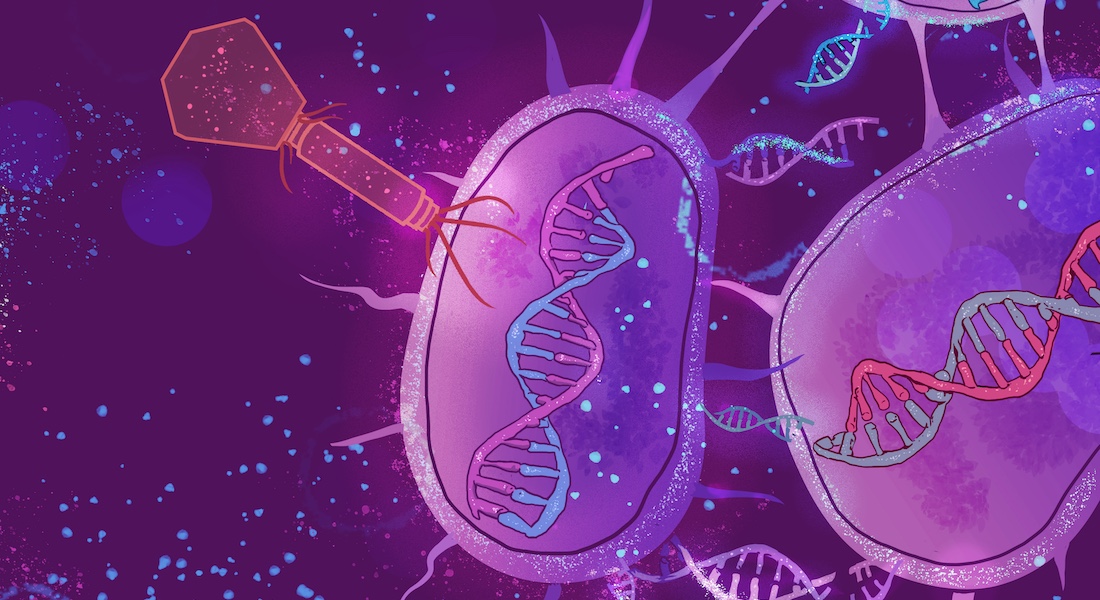
The paper also highlights the role of mobile genetic elements - especially viruses that infect bacteria, known as phages. These elements can act as molecular “hackers,” temporarily rewiring how cells interpret genetic information.
Recent work shows that phages can reassign stop codons, deploy their own transfer RNAs (tRNAs), or even use alternative genetic codes (such as genetic code 15) to control the timing and expression of their genes during infection. Some phages even manipulate the host’s translation machinery to prioritise viral protein production or evade cellular defence systems.
While such changes can reshape local translation during infection, they rarely spread widely across microbial communities, reinforcing the overall stability of the standard code.
Understanding the balance
“Importantly, the genetic code’s universality is not just a relic of ancient biology but an ongoing, dynamic outcome of ecological interactions. Dense networks of gene exchange among microbes continuously reinforce a shared coding system, while isolation allows divergence.” Says Assistant Professor Rodrigo Ibarra-Chávez.
Beyond reshaping evolutionary theory, the findings could have practical implications. Engineering organisms with alternative genetic codes - effectively isolating them from natural gene exchange - may offer new strategies for biocontainment in biotechnology, preventing engineered genes from spreading into the environment.
“We suggest that understanding the balance between connectivity and isolation will be key to explaining evolution and shaping the future” Rodrigo ends.
Read the paper and see the cover here.
Contact
Researcher Peder Worning
Assistant Professor Rodrigo Ibarra Chávez