
New study pioneers conservation hologenomics to protect Denmark’s orchids
A new study introduces a novel approach to plant conservation by integrating population genomics with analysis of orchid root-associated fungi. The research highlights the importance of the holobiont, viewing plants and their microbiomes together, as the true focus of conservation planning.
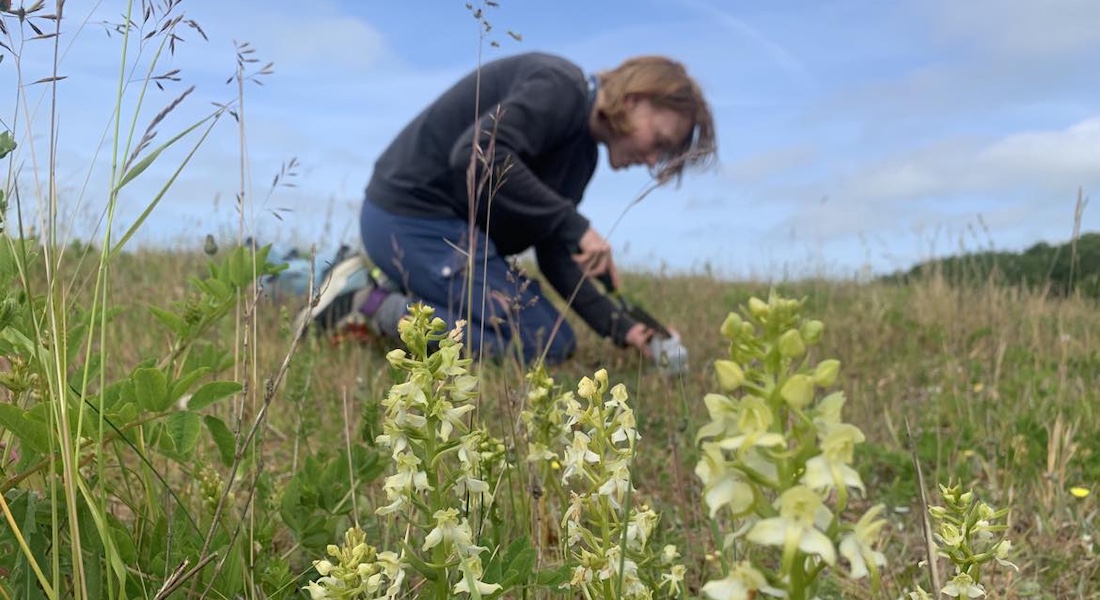
The study examined three closely related orchid taxa in the genus Platanthera, known as butterfly-orchids, across 22 sites in Denmark. By combining genomic data with detailed assessments of the orchids’ root mycobiomes, the group of researchers from the Globe Institute and IGN, led by Associate Professor Ida Hartvig, identified distinct ecological and evolutionary units that would have been overlooked using host genetics alone.
“We found that the fungal communities differed between the three closely related butterfly-orchid taxa. Interestingly we also found differences in the fungal community of the Greater butterfly-orchid based on geography, as the Møn populations harboured significantly different fungal partners than its conspecies from the rest of Denmark. Overall, nutrient availability seemed to be an important factor in shaping the fungal associations of these orchids which could also explain the singularity of the fungal communities of the Møn populations.” says PhD student Ida Junker Madsen, who studied the orchids’ fungal partners in her master thesis.
An essential symbiosis
All orchid species rely on specific mycorrhizal fungi for germination and early development. Despite the essential nature of this partnership, major knowledge gaps still remain. For most orchid species, it is not known who their specific partners are, and how these associations vary among habitats. “Without this knowledge, conservation measures fail to recognize ecologically and evolutionary distinct lineages of orchids adapted to local conditions through associations with particular fungi. “ says Associate Professor Ida Hartvig.
Distinct ecotypes
By combining studies of genetic diversity within and among orchid populations with assessment of their habitat-specific fungal partners, this study was able to recognise distinct ecotypes of Danish butterfly-orchids not previously known, gaining an improved understanding of local adaptation and habitat needs for these vulnerable species.
“We now have knowledge about what fungal partners the different butterfly-orchid taxa use across their range in Denmark, which is essential both for conservation and reintroduction practices. More broadly, this study highlights the importance of hologenomic studies for the protection of endangered orchids” Ida Hartvig ends.
The authors propose adopting this combined genomic–microbiome perspective, termed conservation hologenomics, to define evolutionarily significant units in orchids, offering a more holistic framework for safeguarding vulnerable plant species across the globe.
The study is available open access in Journal of Conservation and was supported by the Carlsberg Foundation, Horizon Europe, 15. Juni Fonden and GB Hartmanns Familiefond.
Contact:
PhD student Ida Junker Madsen
Associate Professor Ida Hartvig