
PhD fellowship in experimental hologenomics
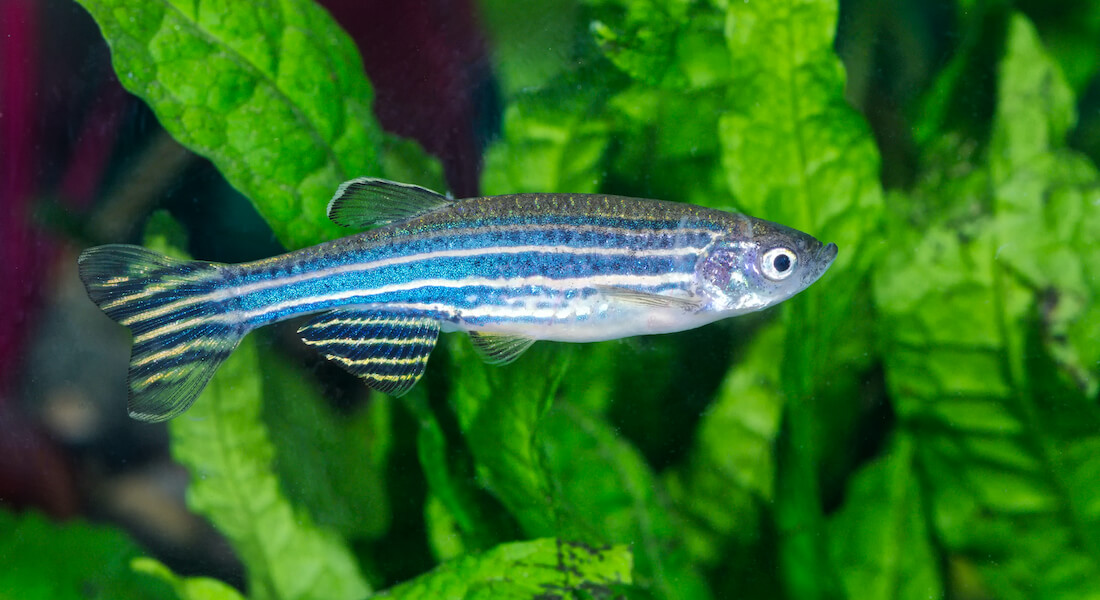
We are looking for a highly motivated and dynamic candidate to fill a 3-year PhD studentship commencing September 1st, 2026, or as soon as possible thereafter. The student will apply CRISPR and epigenetics-based tools to work on zebrafish hologenomics at the Center for Evolutionary Hologenomics, GLOBE Institute, University of Copenhagen.
Our group and research
The Center for Evolutionary Hologenomics is funded by the Danish National Research Foundation to develop and implement state of the art ‘omics and associated computational techniques, to address through experimental and theoretical research, four key themes underscoring life on earth. Specifically, these are: What is the relationship between a host’s genome and the functional and taxonomic makeup of its associated microbial metagenome? Does this relationship explain ongoing ecological and evolutionary processes in the host? Could this relationship provide an alternate explanation to some of life’s big transitions? And, how have we humans exploited this relationship? The Centre is embedded within the GLOBE Institute, that is part of the Faculty of Health and Medical Sciences at the University of Copenhagen.
Project description
The gut microbiome shapes the phenotype of vertebrate hosts, with profound consequences for their growth and health. There is now also an increasing interest in studying how the host controls the composition of its associated microbiome community. This project will use a zebrafish model system to study how certain host genes and associated epigenetic mechanisms play a role in controlling the zebrafish microbiome. The project will include a collaboration with Department of Veterinary and Animal Sciences at University of Copenhagen including the application of CRISPR/Cas to generate novel gene knockout mutant lines of zebrafish. The application of novel confocal microscopy imaging methods, such as the GenomeFISH protocol, are expected to supplement spatial resolution of the gut microbiome community. The student is expected to combine these methods into a hologenomics approach to study the effect of specific genes as well as their epigenetic machinery in regulating the host associated microbiome dynamics. This PhD fellowship will be supervised by Assoc. Prof. Morten Limborg and Assoc. Prof. Louise von Gersdorff Jørgensen.
Principal supervisor is Assoc. Prof. Morten Limborg, Center for Evolutionary Hologenomics, the GLOBE Institute, morten.limborg@sund.ku.dk, +45 61 28 29 84
Start: 1st September 2026 or as soon thereafter
Duration: 3 years as a PhD fellow
Job description
Your key tasks as a PhD student at SUND are:
- Carrying through an independent research project under supervision.
- Completing PhD courses or other equivalent education corresponding to approximately 30 ECTS points.
- Participating in active research environments including a stay at another research team.
- Obtaining experience with teaching or other types of dissemination related to your PhD project
- Teaching and disseminating your knowledge.
- Writing a PhD thesis on the grounds of your project